Is Organic Farming More Profitable Than Conventional Farming?
A 2015 analysis of organic vs conventional farming, covering 44 studies, 55 crops and 14 countries, found that organic farms were 22% to 35% more profitable than conventional farms, and that figure includes the premium, which is the higher price buyers paid for organic crops. Take the premium out and the same organic farms came out 23% to 27% behind on net present value, which is the money a farm earns over the years counted in today's value.
That puts the buyer at the center of the decision, and a lot of the figures below come down to the same question, who pays the organic price and for which crop.
The short answers
| Question | Answer |
|---|---|
| Which is more profitable for the farmer, organic or conventional? | Organic, if the buyer pays the organic price. Organic farms were 22% to 35% more profitable with the premium and 23% to 27% behind without it. Results in Kenya, Nicaragua and Egypt were mixed. |
| Is natural farming more profitable than conventional? | Not proven. One study in India's Andhra Pradesh state found net income 49% higher, and India's National Academy of Agricultural Sciences called the method unproven. |
| How much does conventional farming cost per acre? | In Illinois in 2025 a corn acre cost $1,187 and a soybean acre cost $878, land included. These are US figures and won't match your country. |
| How much does organic farming cost? | Total cost comes out close to conventional, and labor costs run 7% to 13% higher. |
| Is organic farming harder? | Yes. Yields are 25% lower on average, labor costs more, and you wait 36 months before selling as organic. |
| How long before I can sell my crop as organic? | 36 months from the last time you used a banned fertilizer or pesticide, under US rules. If you can document 3 years without them already, the land can qualify right away. |
| Which has more demand, organic or conventional? | Conventional. The highest organic share of food sales that FiBL reports is 12.3% in Switzerland, and in the US it's 6.1%. Organic is growing faster, with US sales up 6.8% in 2025 against 3.4% for the whole market. |
| Where is organic sold the most? | The US with €60.4 billion in 2024, then Germany with €17.0 billion and China with €15.5 billion. China grew fastest at 24.3%. |
| Do buyers pay more for natural farming produce? | Not proven. India doesn't regulate natural farming produce, and farmers told a researcher they struggled to find a buyer paying more than the conventional rate. |
| Is the organic premium paid on all crops? | No. US organic wheat often sold for less than the extra cost of growing it, and in an Indian cotton rotation only the cotton earned a premium. |
| Do high fertilizer prices affect organic farms? | Organic farms don't buy synthetic fertilizer, so the price spike doesn't reach their bills, and AgriLife Organic expects more competition for manure and compost. |
Where organic buyers are
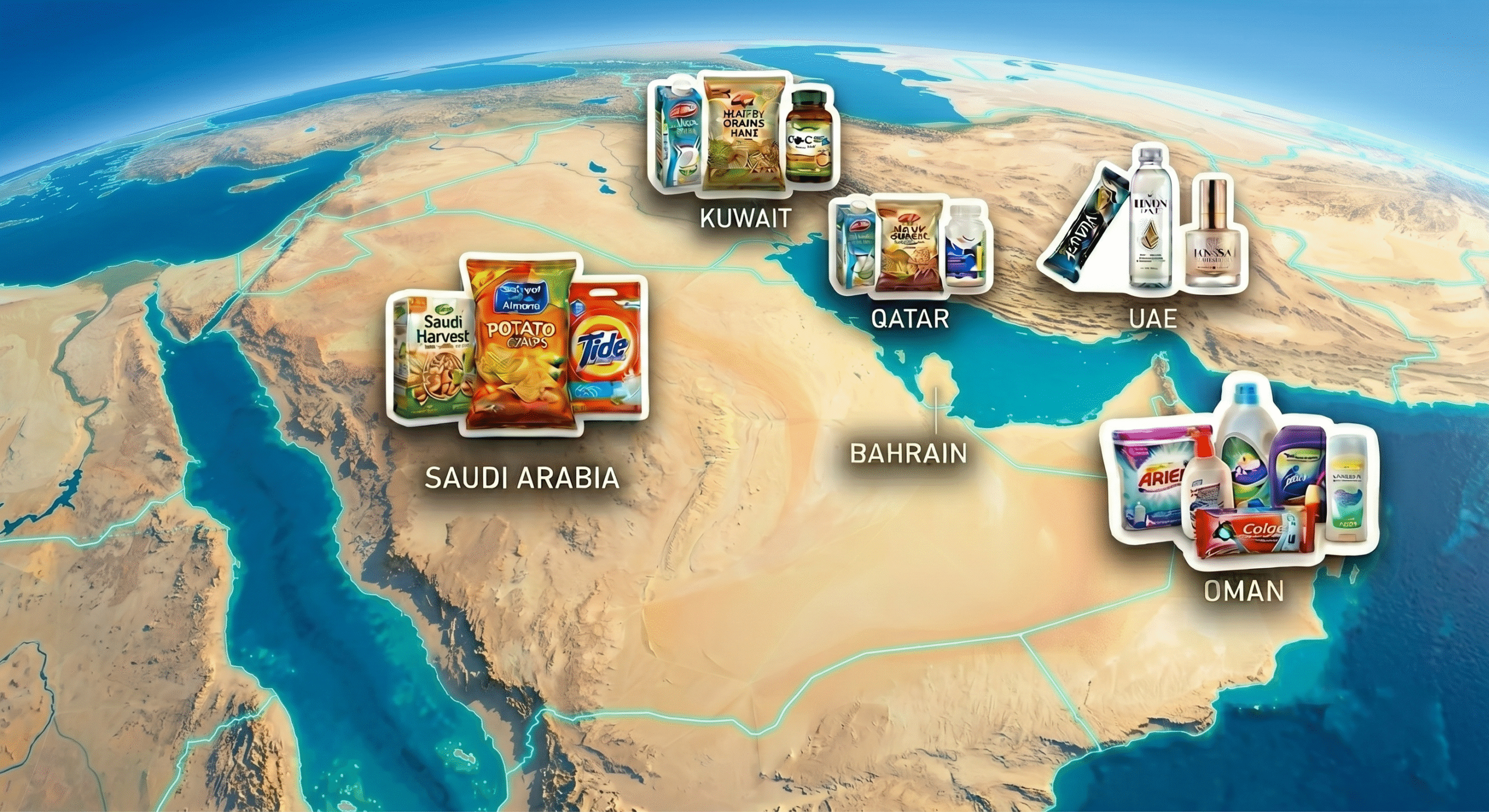
Organic food and drink sold for €145.0 billion at retail in 2024, a record, according to FiBL, the Swiss research institute that tracks the organic sector. North America bought €65.7 billion of that and Europe €58.7 billion, while Asia came to €18.3 billion and China posted the fastest growth among reporting countries at 24.3%. A second research firm, Ecovia Intelligence, counts €135.8 billion for the same year because its method for measuring the market is different.
At the country level the US leads with €60.4 billion, ahead of Germany at €17.0 billion. People worldwide spent €17.7 each on organic food in 2024 and the Swiss spent €481, and organic made up 12.3% of Swiss food sales, with Denmark next at 11.6%. In the US, organic was 6.1% of food sales in 2025 and total organic sales grew 6.8% to $76.6 billion, according to the Organic Trade Association, the US industry group, which forecasts that sales will pass $100 billion by 2030.
The US doesn't grow enough organic to meet that demand. Its organic farmland is under 1% of the total and only about a third of the organic soybeans it uses come from home farms, according to USDA's Economic Research Service, so imports fill the gap. The US and the EU together imported 5.89 million metric tons of organic products in 2024, up 12.3%, and Mexico and Ecuador were the biggest suppliers at more than 765,000 metric tons each.
What conventional farming costs
In Illinois in 2025 it cost $1,187 to grow an acre of corn, land included, which came to $5.16 a bushel (the unit US grain is sold by) at 230 bushels an acre, and $878 for an acre of soybeans, or $12.54 a bushel at 70 bushels, according to University of Illinois farm economists. Those figures come from US grain farms without livestock and, to be honest, they won't match your costs, especially when your land, labor and fertilizer prices are different.
Returns, the money left after all costs, have been thin. In their September 2026 update the same economists raised their 2026 projection for corn in northern and central Illinois from a loss of about $50 an acre to a gain of $50 to $60, and for soybeans from $40 to $60 to $90 to $116.
Fertilizer takes a large part of the bill. Alabama's extension service, a university advice service for farmers, budgets about 24% of corn production costs for fertilizer in 2026, with 17% of the total going to nitrogen alone, and about 16% of cotton costs. Prices have gone up a lot this year. The World Bank expects fertilizer prices to rise more than 30% in 2026 and urea, the most used nitrogen fertilizer in the world, to rise close to 60%, after the closure of the Strait of Hormuz cut Middle East fertilizer exports. Urea went above $850 a metric ton in April, up 80% since February, and the World Bank's September report showed fertilizer prices easing 1.9% in August.
What organic farming costs
Total cost per acre came out close to conventional in the 2015 analysis, and labor was the part that grew, by 7% to 13%. In FiBL's Kenya trials labor drove the cost of organic crops and bought inputs drove the cost of conventional ones.
Yield is the bigger cost. A 2012 analysis in Nature found organic yields 25% lower on average, and 13% lower when organic farmers followed best practices. A summary of the paper puts cereals at 26% lower and vegetables at 33% lower, while legumes and perennials, which are crops that live for years, came much closer.
A lot depends on the crop. In Kenya's long-running trial, cabbage-family crops (brassicas) and potatoes yielded 40% to 60% less under organic management, which the researchers tie to biopesticides that didn't work well and low nutrient supply, while maize matched conventional yields after the 3-year conversion.
Inputs can cost you as well. When synthetic fertilizer gets expensive, manure and compost become worth more to conventional farmers too, and AgriLife Organic warned in September 2026 that organic farms may face more competition for them. It gave one example of poultry manure priced at about $43 a ton that held more than $100 worth of nutrients at fertilizer prices.
The 3 years of transition
US rules require 36 months between the last banned fertilizer or pesticide on a field and the first crop sold as organic. During those months you farm by organic rules, your costs rise while you learn the methods, and your yields drop before any premium arrives. At that point you have paid for organic farming without an organic price to show for it. A field with records showing no banned inputs in the last 3 years can qualify right away.
Timing adds risk. FiBL notes that farms finishing conversion in 2024 started in 2022, before the market downturn became visible, and that the energy crisis and inflation led to fewer conversions in 2022 and perhaps 2023 and may have pushed some producers out of organic farming. FiBL describes a conversion period of 2 to 3 years in Europe.
What buyers pay extra
In the 2015 analysis the premiums ranged from 29% to 32% above conventional prices, and one of the authors said they stayed steady over the 40 years of data. The break-even premium, which is the smallest extra price at which organic profit matches conventional profit, came out at only 5% to 7%, even with yields 10% to 18% lower. The authors didn't forecast what happens to the price if many more farmers go organic.
Crop by crop the picture varies. University of Illinois farm economists report that food-grade organic corn, the kind sold for human food, has averaged $5.45 a bushel above conventional for yellow corn and $7.63 for white, and organic soybeans averaged $10.87 a bushel above conventional at harvest across the 2024 and 2025 crop years, with swings of $1 to $2 a bushel or more being common.
Wheat did worse. USDA's Economic Research Service looked at 2011 to 2014 prices and found organic corn selling $5 to $10 a bushel above conventional corn against an extra cost of $1.92 to $2.27 to grow it, while organic wheat sold as animal feed went for only $1 to $4 above conventional wheat, often less than the extra cost.
The premium also depends on the buyer. In an Indian cotton rotation studied by FiBL, only the cotton earned a premium, the wheat and soybeans in the same rotation did not, and some companies paid no premium at all. At ASAFI we buy directly from origins and work with farmers, rather than middle men, which is why this article stays on the farmer's side of the numbers.
What the profit studies show
Iowa State University ran organic and conventional rotations side by side at one research farm for 13 years. Organic corn and soybean yields matched conventional yields or ran a bit higher, and returns to management, the money left for the family after labor, land and production costs, came out about $200 an acre higher for organic. It's one research site with results published in 2011, so treat it as one case.
Kenya was a mixed case. Organic maize grown with high inputs earned 53% more than conventional maize after a premium of 25% to 50%, and the researchers said a premium was necessary to make organic profitable.
Nicaragua went the other way for coffee. A University of Hohenheim study that followed farmers for 10 years found that organic and organic-Fairtrade farmers became poorer relative to conventional farmers, with organic coffee yields 43% lower and the highest net income going to conventional farmers. Fairtrade Canada replied that production losses unrelated to certification may explain the lower revenue, and the study dates from 2011.
The one Arab-world study we found comes from Egypt. In Menofia governorate, a 2013 study of 4 crops, potatoes, dry beans, peas and tomatoes, found net profit per feddan, the Egyptian land unit of about 0.42 hectare, was higher on conventional farms than on organic farms for all 4.
The two big yield figures don't agree, with Nature at 25% lower and the 2015 analysis at 10% to 18% lower, and since they used different sets of studies we found no source that explains the gap. The farm studies above come from the US, Kenya, Nicaragua, India and Egypt, apart from the 14-country analysis, and we found none from the Gulf, so check any number against your own costs and your own buyer.
EU rules for exporters
If you grow organic crops on a small plot for the EU market, the rules on group certification, where a whole group of farmers is certified together instead of one farm at a time, changed on 1 January 2025 and now cover small producers worldwide, according to a notice from Eosta. To join a group a farm needs to be 5 hectares or less, or earn under €25,000 a year from organic sales, or pay certification costs above 2% of annual sales, and outside inspectors have to visit at least 5% of the members each year.
FiBL names the new EU regulation as a major factor behind the 2024 farmland figures, which were flat worldwide, as groups left the organic control system or postponed certification, and organic farmland in Africa fell 17.6% that year. FiBL adds that one large group leaving can change a region's total a lot, so the drop may not mean the farming itself shrank. At ASAFI we supply commodities globally, and rules like this one decide what smallholders need before their crop can be sold as organic in Europe.
The EU imported 2.64 million metric tons of organic agri-food products in 2024, up 6.4%, with Ecuador as the top supplier and India growing fastest among the major exporters.
Natural farming
Natural farming means growing with non-synthetic inputs made near the farm instead of bought ones, and the best-known program is in Andhra Pradesh, an Indian state, where more than 630,000 farmers had adopted it by 2023. A study by GIST Impact, a data firm, supported by the Global Alliance for the Future of Food, compared it with 3 other farming systems in the state and found yields of the main crops 11% higher, net income 49% higher and gross income per hectare up $684, or 28.3%.
A lot of researchers want more proof, to be honest. A 2023 research paper published by Springer says data that has been tested with statistics on the yield benefits is lacking, India's National Academy of Agricultural Sciences called the approach unproven, and research from the Indian Council of Agricultural Research found mixed yields, with finger millet up in Karnataka, paddy and sugarcane down, and paddy up in Andhra Pradesh.
On the selling side, India doesn't regulate produce grown by natural farming, a voluntary certification for it is new, and farmers told a researcher writing for The India Forum in May 2026 that they struggled to find a buyer willing to pay more than the conventional rate.