
China’s New 0% Tariff Policy on African Exports: Which Products Now Get You Up to 30% Extra Margin.
In Q1 2026, China's imports from Africa grew 14.6% year on year. Bilateral China-Africa trade jumped 23.7% in that same period. China's direct investment in Africa surged 44% in just the first two months of the year. These numbers were already moving in a strong direction before May 1, 2026. On that date, China extended zero tariff treatment to 53 of Africa's 54 countries. The opportunity for African food commodity traders got significantly larger as a result.
This article breaks down exactly what the policy covers, which products generate the highest margin gains, and what traders need to understand to act on it now.
What the Policy Is
On February 14, 2026, Chinese President Xi Jinping announced the expansion of China's zero tariff policy at the 39th African Union Summit in Addis Ababa. The Customs Tariff Commission of China confirmed the details on April 28. The policy took effect on May 1, 2026.
It covers 53 of Africa's 54 countries. Eswatini is the one country excluded, due to its diplomatic ties with Taiwan rather than Beijing. The policy applies to 100% of tariff lines and runs from May 1, 2026 to April 30, 2028.
How We Got Here
This policy builds on a first phase launched in December 2024. That phase gave zero tariff access to 33 of Africa's least developed countries. The May 2026 expansion additionally brings in the 20 bigger African economies previously excluded. Those include South Africa, Nigeria, Kenya, Egypt, Algeria, and Morocco.
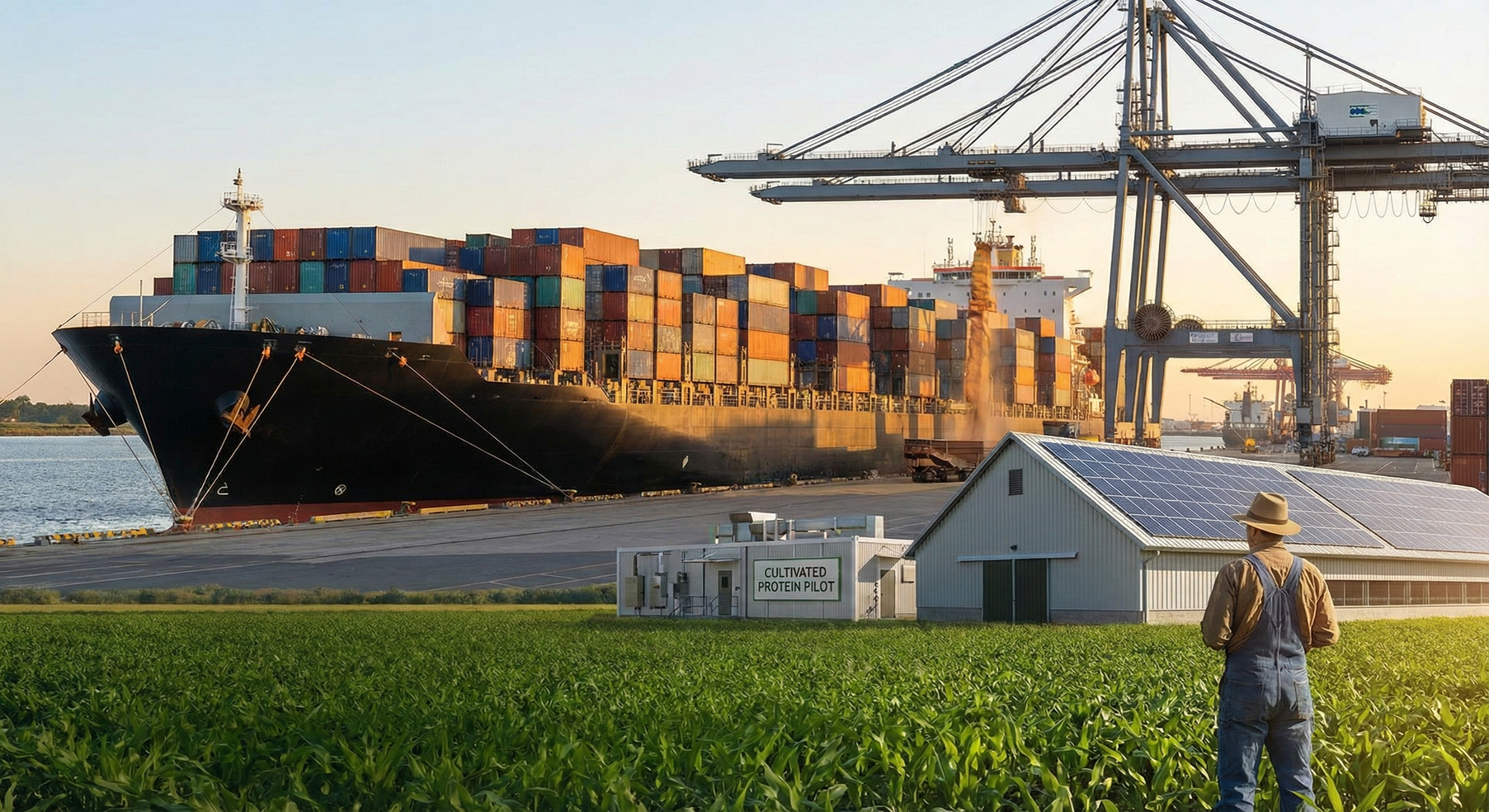
China has been Africa's largest trading partner for 17 consecutive years. Total China-Africa trade reached a record $348 billion in 2025, a 17.7% increase from 2024. African exports to China reached $123 billion in 2025, up 5.4% year on year. Furthermore, China's total agricultural import market was worth $207.4 billion in 2025. That is the scale of the market your products are now entering duty free.
What You Need To Know First
Before getting to the products that generate real margin gains, there is a number worth understanding.
Roughly 94.5% of Africa's exports to China, covering oil, minerals, copper, gold, and cobalt, already entered China at zero or near-zero tariffs. The policy change on May 1 does not affect those categories.
The remaining 5.5% of African exports to China previously faced China's Most Favored Nation tariff rates. These are the product categories where removing tariffs creates a genuine competitive advantage. For traders operating in agricultural products and processed food, specifically, the gain is direct and measurable.
The Products Where Your Margin Moves
Coffee
Green coffee previously carried an 8% tariff on entry into China. Roasted coffee carried a 15% tariff. Both are now zero. For roasted coffee exporters, that 15% removal translates directly into a pricing advantage over competitors from other regions.
Ethiopia supplies 65% of Africa's coffee exports to China. Uganda supplies 18%, Tanzania 9%, and Kenya 4%. The results from the December 2024 phase one policy are already visible. In the first five months after that policy launched, China's import value of African coffee surged 145.7% year on year, according to data from China's General Administration of Customs.
China's coffee consumption market is growing fast. Chinese consumers are actively trading up to premium imported varieties. African Arabica, particularly Ethiopian, already has strong recognition in China's specialty coffee segment. Consequently, the removal of the 8% to 15% tariff removes the last major pricing friction for volume exporters.
Cocoa
Cocoa previously carried an 8% tariff entering the Chinese market. That rate is now zero. In addition, in the five months following the December 2024 policy, China's cocoa bean imports from Africa surged 88.6% year on year.
Côte d'Ivoire and Ghana together account for over 50% of the world's cocoa supply. Chinese imports of cocoa had previously been modest, valued at approximately $79 million annually. With the duty removed and Chinese consumer appetite for chocolate products growing steadily, the export volume potential for West African cocoa suppliers is substantial.
Oilseeds and Sesame
Oilseeds including sesame, sunflower, and soy previously faced Most Favored Nation tariff rates of 3% to 15% depending on the specific product. African oilseed exports to China were valued at $2.4 billion annually. That makes this one of the highest value categories affected by the May 2026 policy change.
Tanzania and Zimbabwe are among the largest sesame exporters to China. A study published in the Frontiers of Agricultural Science and Engineering confirmed that 37.8% of Africa's oilseed and fruit exports are already destined for China. That figure surpasses Europe, the US, and the Middle East as the primary destination. As a result, reducing tariffs to zero further strengthens a trade corridor that is already dominant.
Citrus, Fruit, and Wine
South Africa's citrus fruits and wines previously faced tariffs of up to 30% on entry into China. Those rates are now zero for the full policy window. Notably, in 2025, despite a 3.6% overall decline in China's agricultural imports, Chinese purchases of fruit rose 6.7% in value.
South Africa already ranks as China's leading agricultural export partner in Africa. It accounts for 13.4% of China's total agricultural imports from the continent. The first batch of goods to clear customs under the new May 2026 policy was 24 tonnes of South African apples at Shenzhenwan Port in Shenzhen.
Cashews, Ginger, and Pepper
Nigeria's non-oil agricultural export basket includes cashew nuts, sesame, ginger, pepper, and cocoa. All of these previously faced tariff costs of 8% to 15%. Those rates are now zero. Therefore, Nigerian traders now hold a genuine pricing advantage over producers from competing regions. A Chinese government endorsed cashew export framework, signed during President Tinubu's 2024 state visit to Beijing, further supports this opportunity.
Tobacco
Raw tobacco from African nations previously carried a 10% tariff in China. African tobacco exports to China were valued at approximately $897 million annually. Zimbabwe and Mozambique are the primary suppliers. The tariff removal adds margin across an already large trade volume.
The Countries Best Positioned Right Now
The traders and exporters who will capture the most from this window are those with organized supply chains, established relationships with Chinese buyers, and the logistics capacity to ship at commercial volumes.
Ethiopia has volume, quality, and existing buyer relationships in coffee. Kenya holds a first mover advantage in avocados. It became the first African country approved to export avocados to China in 2022, with volumes climbing since. Côte d'Ivoire and Ghana have the cocoa scale to supply Chinese industrial buyers at pace. South Africa has processing capability and cold chain infrastructure across fruit, wine, and citrus categories. Nigeria has the agricultural base across multiple categories and a government endorsed export framework in cashews.
The Two Year Window
Why the Timeline Matters
The policy runs until April 30, 2028. Two years is enough time to build relationships, run test shipments, qualify products under Chinese food safety standards, and establish a commercial foothold in a market of 1.4 billion consumers. Traders who start the relationship building process in 2026 will be significantly better positioned than those who begin in 2027.
What You Need in Place
From a practical standpoint, accessing the Chinese market requires phytosanitary certificates, certificates of origin, and compliance with China's sanitary standards for food imports. These are manageable steps with the right operational support. The documentation and customs clearance process is precisely the kind of complexity that commodity trading companies like ASAFI navigate across 30-plus countries as a core part of their business.
The Bigger Opportunity
The $123 billion in African exports reaching China in 2025 was built largely on oil, minerals, and raw materials. The zero tariff policy creates the conditions for agricultural and processed food exports to grow their share of that total meaningfully over the next 24 months. In fact, the data from phase one already points in that direction. Beyond coffee and cocoa, China's sugar purchases jumped over 13% by volume in 2025. Fruit import values grew 6.7%. These are categories where African exporters are active and improving.
The Full Margin Picture at a Glance
To summarize the tariff gains by product, roasted coffee moves from 15% to 0%. Green coffee moves from 8% to 0%. Cocoa moves from 8% to 0%. Oilseeds including sesame move from 3% to 15% down to 0%. Tobacco moves from 10% to 0%. Citrus and wine from South Africa move from up to 30% down to 0%. Cashews, ginger, and pepper move from 8% to 15% down to 0%.
For a roasted coffee exporter, that is a 15 percentage point margin improvement on every kilogram crossing the Chinese border. For a citrus exporter from South Africa, it is up to 30 percentage points. The exact impact on your profit depends on your volumes, your logistics costs, and your pricing structure in the Chinese market. The tariff removal is the single most direct lever that has moved in your favour this year.
The $348 billion China-Africa trading relationship has run almost entirely on oil and minerals for two decades. The May 2026 policy is the first structural shift that makes African food and agricultural exports genuinely competitive in China's market at scale. The window is open for exactly 24 months.
Ready to move your African commodity exports into the Chinese market? Contact the ASAFI team and let's map out a profitable route to market for your specific products.